

Why Real-Time Rendering Looks to the Italian Baroque
Real-time rendering has reached a point where technical capability is rarely the only limiting factor. Ray tracing can model convincing light transport, volumetric systems can fill a room with haze, and physically based materials can respond to illumination with remarkable consistency. Yet a scene can still feel exhausting to read. Every surface may be visible, every corner may contain detail, and every light may contribute plausible information without creating a clear visual priority.
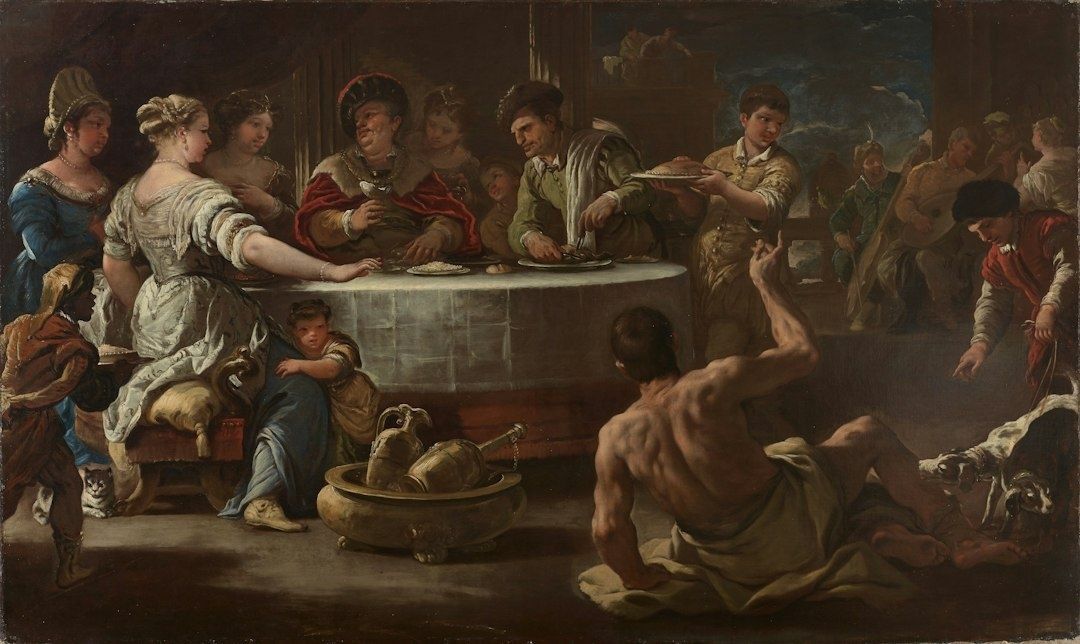
Caravaggio approached a related problem centuries earlier. His paintings do not attempt to reveal everything. Instead, they use severe contrasts between illumination and darkness to decide what deserves attention, what supports the subject, and what can remain unresolved. For a technical artist or lighting director, that discipline offers a useful corrective to the assumption that more visible information automatically produces a better image. The most effective real-time lighting often comes from controlling what the player cannot see as carefully as what the player can.
Chiaroscuro Versus Tenebrism on the Modern Canvas
Chiaroscuro is fundamentally the modulation of light and shade across a form. It allows a rounded cheek, a folded sleeve, or a stone column to emerge through gradual changes in value rather than through outlines alone. In a digital environment, the same principle appears when a key light establishes a readable plane transition, a softer fill preserves material information, and ambient occlusion reinforces the contact between objects. Understanding the foundational definition of chiaroscuro clarifies how high-contrast value distribution sculpts geometric forms in three dimensions.
Tenebrism is related but more extreme. In tenebrist composition, parts of the image remain completely or nearly completely black while selected figures or objects are struck by intense illumination, often suggesting a single theatrical source. The darkness is not merely a shaded version of the environment. It becomes an active compositional field that withholds information and isolates the focal subject. This distinction matters in a game engine because a scene using ordinary chiaroscuro may still preserve readable secondary forms, while a tenebrist scene deliberately lets those forms disappear.
The practical translation is not to copy a historical painting literally, but to separate the functions of different lighting passes. A controlled setup might use a directional key to define the subject, restrained skylight to keep important surfaces from collapsing, contact shadows to anchor props, and volumetric scattering to make the light path legible. A tenebrist variant would lower indirect contribution, tighten the exposure range around the key, and allow selected background regions to reach very low luminance. The result should be evaluated from the player camera, because a technically accurate light transport solution can still fail as a composition.
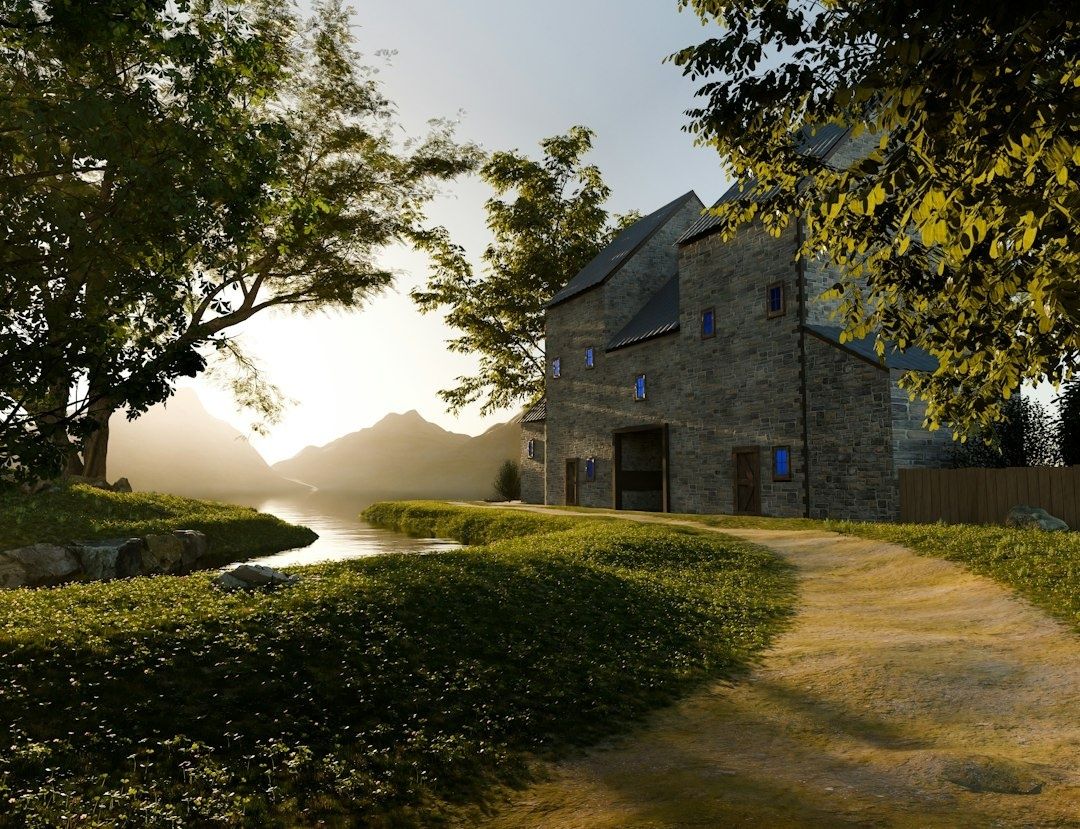
- Chiaroscuro preserves enough shadow information to model volume and spatial depth.
- Tenebrism uses near-black areas and concentrated illumination to isolate a subject dramatically.
- Engine lighting should assign each pass a clear role instead of allowing every light to compete for attention.
The key difference is intention. Blackness produced by an accidental exposure problem feels broken, while darkness placed around a doorway, character, or landmark feels designed. Technical artists should therefore inspect luminance distribution before adding detail. If the value hierarchy is unclear in a flat grayscale preview, additional texture resolution or ray-traced reflections are unlikely to solve the underlying problem.
Visual Architecture and Directing the Player Eye
A player does not navigate an environment by reading every object equally. Attention moves toward contrast, faces, motion, saturated color, and changes in spatial structure. Historical visual analyses of chiaroscuro techniques document why localized brightness surrounded by darkness commands attention so efficiently. In interactive spaces, that principle can replace some artificial guidance systems. A brighter stairwell, a narrow shaft of light across a threshold, or a warm reflection on a distant architectural feature can suggest direction without placing a floating marker in the player”s view.
This approach works best when light supports the spatial logic of traversal. A key light should not merely decorate the destination; it should establish a sequence of readable decisions. Deep occlusion can compress unimportant side routes, while a controlled gradient can lead from the current position toward the next meaningful space. The player still retains agency, but the environment communicates priorities through its values, edges, and focal transitions.
Directional luminance also affects psychology. A low, narrow light can make a corridor feel vulnerable and exposed, while a high, broad source can make the same geometry feel ceremonial or safe. A partially obscured source introduces uncertainty because the player understands the direction of illumination without seeing its origin. Volumetric haze can strengthen this effect, but it must remain subordinate to composition. Too much fog turns every illuminated path into visual noise and reduces the very hierarchy the effect was intended to create.
- Identify the decision point. Choose the doorway, path, character, or landmark that should receive priority from the intended camera position.
- Build a value path. Connect the player”s current location to that target with controlled transitions rather than a chain of equally bright lights.
- Suppress competition. Reduce unnecessary highlights, reflections, and background exposure near the focal area.
- Test without interface support. Temporarily remove waypoints and prompts to determine whether the lighting communicates direction on its own.
This method does not mean that every environment needs theatrical darkness. Chiaroscuro can operate at modest contrast, particularly in exploration spaces where secondary navigation information must remain available. The objective is not to force the player”s eye to one pixel, but to establish a ranking: primary subject first, supporting route second, atmospheric and decorative information last.
Comparing Classical Techniques with Real-Time Implementation
Classical painters prepared an image through layers, surfaces, and controlled application. A prepared ground established the overall response of the painting, while transparent or semi-transparent glazes could deepen color and alter the perception of light without covering every underlying decision. In a real-time pipeline, the closest equivalents are the scene”s base exposure, material response, color grading, and layered lighting passes. A dramatic single-source key maps more directly to a dominant directional or area light, while subtle reflected illumination functions like the retained information inside painted shadows.
| Classical idea | Real-time equivalent | Primary trade-off |
|---|---|---|
| Prepared ground | Exposure, world lighting, and base tone mapping | Sets the scene”s overall value range, but can flatten later adjustments if poorly calibrated |
| Oil glazing | Layered fog, color grading, reflections, and post-process response | Adds depth and atmosphere, but can reduce clarity when stacked without hierarchy |
| Single-source key | Dominant sun, spot, or area light | Creates strong direction and focus, but may expose weak shadow design |
| Retained shadow detail | Indirect light, ambient contribution, and bounce lighting | Preserves form, but excessive contribution weakens contrast |
Useful parameters should be tuned in relation to one another rather than in isolation. Volumetric fog needs enough density to reveal a beam, but not so much that distant silhouettes become uniformly gray. Contact shadows should be strong enough to anchor feet, props, and architectural joints, while remaining short and stable enough to avoid distracting artifacts. Tone mapping should protect bright focal accents and preserve intentional dark regions. If the curve lifts every shadow to improve visibility, it may erase the very negative space that gives the composition its force.
Pruning Engine Clutter with Intentional Shadows
Over-lighting is often presented as a safety measure. Artists raise ambient exposure, add fill lights to every room, increase indirect bounce, and brighten materials so that no object appears lost. The result may be technically legible, but it frequently lacks hierarchy. Repeated highlights compete with characters, background geometry remains equally prominent, and the player receives too many simultaneous signals. A scene becomes easier to inspect in an editor while becoming harder to experience as a directed image.
Intentional shadow offers both an artistic and a production advantage. Areas that do not support gameplay or narrative emphasis do not always need to be fully described. A deep shadow can conceal simplified geometry, reduce the need for expensive secondary detail, and protect the focal subject from visual competition. This does not justify hiding broken assets or creating unfair gameplay conditions. It means deciding where resolution, simulation, and illumination produce meaningful value. Darkness is useful when it is consistent with the world, stable across camera movement, and reversible when the player genuinely needs information.
A practical workflow begins with a simple lighting blockout. Use one dominant source and a restrained environment contribution before introducing decorative lights. View the scene in grayscale, then check the silhouette of the principal character or object at the distances where it matters. Add only enough fill to separate essential forms from the background. Next, introduce contact shadows and selective bounce, watching for the point at which added realism begins to flatten the composition. Finally, test movement, exposure adaptation, and different display conditions, because a carefully tuned still frame can fail when the camera or player changes position.
- Start with a single clear key and establish its direction before adding fill.
- Use grayscale and low-resolution previews to judge value hierarchy without material distraction.
- Reserve bright accents for objectives, characters, interaction points, and meaningful landmarks.
- Allow non-essential geometry to merge into shadow where the player does not need it.
- Check silhouettes during gameplay, not only from a carefully selected editor camera.
- Audit temporal stability so that shadows do not flicker, crawl, or reveal unwanted detail during motion.
Absolute black should be used with judgment. A completely crushed region can communicate danger, mystery, or theatrical focus, but it can also hide collision hazards and make navigation frustrating. The stronger approach is to create a range of darkness: near-black for the outer frame, slightly lifted shadow for supporting architecture, and controlled midtones for forms that the player must understand. This preserves the emotional authority of tenebrism while retaining the practical readability expected from an interactive medium.
Mastering the Shadows in Future Digital Worlds
Caravaggio”s lasting lesson for real-time artists is not simply to increase contrast. It is to treat light as visual architecture. A key light establishes the event, shadow determines what remains outside it, and the relationship between the two gives the scene narrative direction. Ray tracing and volumetrics are valuable because they can produce more convincing relationships between sources, surfaces, and atmosphere. They become truly expressive only when those relationships are placed inside a deliberate value structure.
Before approving a lighting pass, inspect the image with the materials desaturated, the interface hidden, and the camera positioned as the player will experience it. Ask which object is seen first, where the eye travels next, and whether the darkest regions feel purposeful rather than accidental. Adjust exposure, indirect light, fog density, contact shadows, and tone mapping as a coordinated system. The goal is not to fill every lumen or expose every polygon. It is to make each visible passage earn its place, while allowing calculated darkness to carry mood, focus, and meaning.