

Rethinking Generative Media Through the Legacy of the Cut-Up
Generative media did not emerge from a historical vacuum. Its apparent novelty can obscure a much older creative question: what happens when an artist takes materials produced elsewhere and reorganises them into a new cultural argument? From Cubist collage and Marcel Duchamp”s readymades to Dada photomontage, sampling, memes, and contemporary computational systems, artists have repeatedly challenged the idea that originality means creating from nothing. Appropriation has instead treated culture as a field of repetitions, associations, exclusions, and power relations.
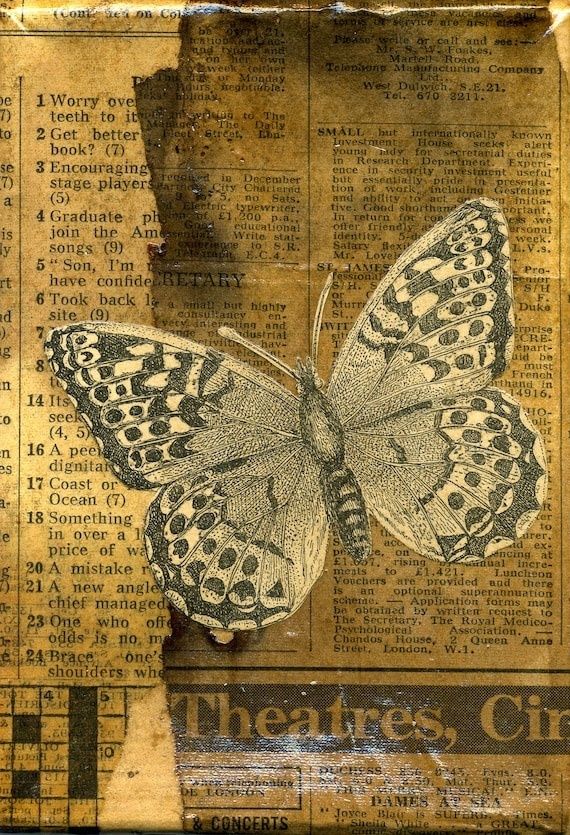
Collage and cut-up practices became foundational twentieth-century methods of critique because they made those relations visible. A newspaper fragment, a fashion photograph, a political slogan, or a commercial logo could be removed from its ordinary setting and forced into an uncomfortable conversation with another fragment. The key issue was not simply reuse. It was the friction created by selection, collision, and material interruption. Physical media resisted the artist through paper grain, imperfect cuts, adhesive, scale, and the limited availability of source material. Much contemporary generative media removes that resistance. It can produce seamless combinations at enormous speed, but seamlessness can also weaken the political charge that once came from making cultural contradictions impossible to overlook.
The Political Resistance of Physical Photomontage
Hannah Höch and the Berlin Dadaists understood that mass media could be contested by attacking its visual grammar. Höch”s photomontages cut into the newspapers, magazines, photographs, and popular imagery that helped shape public ideas about national identity, modernity, gender, and authority. Her work did not merely illustrate a political position. It dismantled the authority of the image by showing that public meaning could be taken apart and rebuilt.
Her best-known work, Cut with the Dada Kitchen Knife through the Last Weimar Beer-Belly Cultural Epoch of Germany, turned the tools of domestic labour into an image of political intervention. The title itself connects the kitchen to the supposedly serious world of state power and cultural leadership. Within the composition, political figures, Dada artists, machinery, performers, and bodies collide. The resulting instability challenged both Weimar political spectacle and the gender conventions of the avant-garde itself. Höch”s position as a woman working in a male-dominated Dada environment mattered: the montage did not only attack official propaganda, it also questioned who was permitted to define modern culture.
The cut edge was part of the argument. A visible laceration announced that the image had been taken from somewhere else. Paste, overlap, distortion, and mismatched scale prevented the composition from pretending to be a natural or neutral view of reality. That material awkwardness exposed the constructed character of mass media, while the clash between recognisable fragments preserved their social histories. A politician remained legible as a politician; an advertisement remained marked by consumer culture; a fashionable body remained connected to conventions of beauty and display.
- Selection identified which images deserved attention and which could be displaced.
- Juxtaposition created meaning through conflict rather than harmony.
- Visible seams reminded viewers that every image had been framed, circulated, and edited.
- Contextual recognition allowed familiar fragments to carry their political and commercial associations into the new work.
This is why appropriation cannot be reduced to copying. As critical media studies and art-historical scholarship demonstrate, appropriation continues to serve as a durable method for examining authorship, ideology, ownership, and representation. Institutional research contexts, including UCR Profiles, can help situate these questions alongside the broader tradition, which includes Duchamp”s recontextualisation of the mass-produced urinal, Pop artists” treatment of advertising, the Pictures Generation”s interrogation of photographic conventions, and feminist and anti-racist interventions into canonical imagery. In each case, the source remained important because its prior meaning was part of the material being contested.
When Friction Dissolves into Latent Space
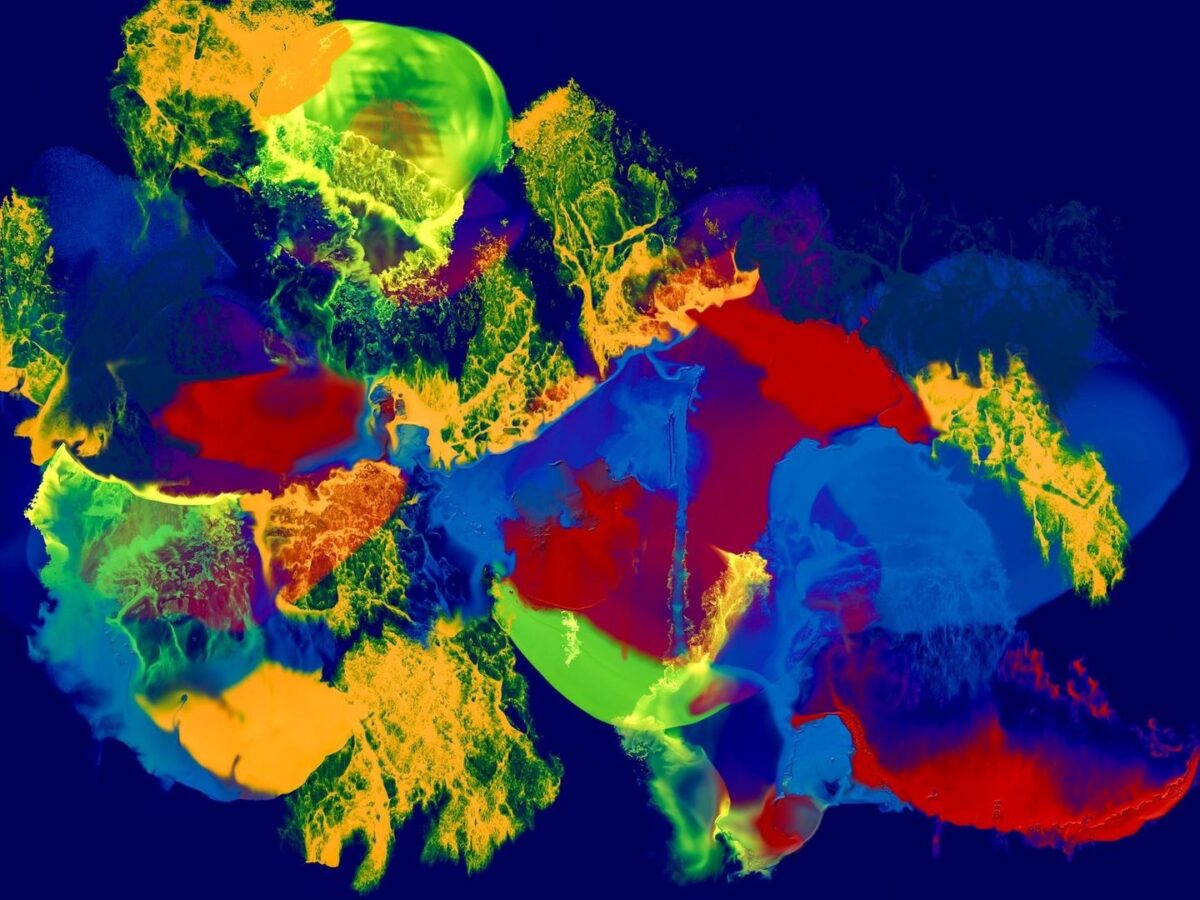
Contemporary generative systems change the location of selection. In a mechanical cut-up, the artist chooses an identifiable fragment and physically places it within a new arrangement. In a neural system, relationships between images, words, and styles may be represented as mathematical distributions in latent space. Latent space is a computational landscape in which features are encoded as numerical relationships, allowing a model to interpolate between patterns without presenting the original source fragments as visible pieces.
This distinction does not mean that algorithmic generation lacks all intention. A creator can choose prompts, seeds, models, image libraries, masks, and post-processing decisions. The Samila generative art library, for example, uses mathematical functions and controlled randomness, with random seeds and projection modes influencing whether an output is reproducible or unpredictable. Its approach connects contemporary computational art to earlier chance-based practices in Dada, Surrealism, Abstract Expressionism, and algorithmic art. Yet the friction is different. A system can produce a visually coherent result without requiring the artist to confront the specific cultural baggage of each source image.
| Mechanical cut-up | Algorithmic assemblage |
|---|---|
| Uses selected, recognisable fragments | Often uses statistical relationships learned across large collections |
| Shows cuts, overlaps, paste, and material limits | Can smooth transitions and hide the process of combination |
| Depends on deliberate contextual collision | May depend on aggregate similarity and model optimisation |
| Preserves visible evidence of source histories | Can obscure provenance behind a synthesised surface |
| Creates resistance through manual labour and limited resources | Creates scale, speed, and variation through automation |
There are important exceptions. CLIP-CLOP, for instance, treats collage as a human-guided computational process rather than asking a model to invent an image from an opaque internal representation. Artists curate image patches while the system optimises their position, scale, rotation, shear, colour, and opacity in response to text prompts. This retains more compositional control and makes it possible to inspect the ingredients. The example points toward a smarter way to approach generative tools: use computation to extend selection and iteration without allowing the system to erase the evidence of selection altogether.
The Intermedia Bridge and Multi-Disciplinary Assemblage
The history of appropriation has never belonged exclusively to static images. Artists have moved between photography, printmaking, film, sound, performance, text, and software, treating each medium as both material and argument. Early collage established a logic of recombination that later appeared in experimental film, tape music, sampled sound, artist books, digital montage, and interactive installations. The question was always how one medium could interrupt another, and what became newly visible at the boundary.
That intermedia history offers a useful model for working with generative systems. Software can act as a collaborator when its rules are legible, adjustable, and meaningfully shaped by the artist. It becomes an opaque factory when the creator cannot explain what materials influenced the output, what transformations occurred, or which human decisions mattered. The difference is not whether automation is present. The difference is whether the workflow preserves opportunities for judgment, refusal, revision, and accountability.
Bill Seaman”s practice provides a clear example of this broader direction. His work in “Recombinant Poetics” connects image, music, text, interaction, and generative processes, while treating the relationships among those elements as part of the artwork. The “Map of Reflections” CD, created with Monika Bugajny, makes its collaborative structure tangible through music, photography, a zine, Polaroids, and production credits. Its material package matters because it identifies contributors and preserves a chain of decisions rather than presenting synthesis as an unexplained event.
For digital creators, the practical lesson is to move from passive ingestion toward intentional archival recombination. A curated collection of images, sounds, texts, or scans can function as a declared vocabulary. Metadata, annotations, version histories, and visible transformations can then become part of the work. This approach does not eliminate ambiguity, and it does not make appropriation automatically ethical. It does, however, give audiences a way to understand how the work was built and whose labour or cultural history it mobilises.
A Practical Framework for Evaluating Digital Meaning
Technical novelty is a poor measure of cultural significance. A sophisticated model can still produce a generic image, while a modest workflow can generate a sharp critique if its materials and decisions are carefully organised. Before making a decision about a tool or process, evaluate whether it strengthens the work”s meaning or merely increases output. Three principles are particularly useful: provenance transparency, intentional friction, and ethical reciprocity.
- Document provenance. Record where source materials came from, what permissions or licences apply, and whether the collection contains identifiable artists, communities, or cultural traditions. When using a model, disclose the relevant dataset information when available, along with prompts, seeds, model versions, major settings, and significant edits. Documentation does not solve every legal or ethical problem, but it makes claims about originality more precise.
- Reintroduce intentional friction. Allow the seams to remain visible. Use masks, rough edges, incomplete erasures, captions, source labels, compression artefacts, contact sheets, or abrupt changes in scale when those features serve the argument. Friction should not be added as a decorative “glitch” effect without purpose. It should help viewers recognise that the image has been assembled and ask what its parts bring with them.
- Practice ethical reciprocity. Acknowledge the labour, communities, and historical struggles embedded in the source material. Do not treat cultural motifs as frictionless visual textures. Consider consultation, credit, compensation, restricted use, or non-use where appropriate. Appropriation can challenge dominant power, but it can also reproduce extraction when creators claim the right to recombine everything simply because a file is technically accessible.
This framework also applies to memes and fast-moving online formats. Feminist, queer, anti-racist, and anti-capitalist meme cultures use collage, re-enactment, bricolage, and montage to contest dominant narratives. Their effectiveness often depends on shared recognition and tactical timing. A meme can carry a political charge because viewers understand the borrowed image, the platform convention, and the community-specific alteration at once. Automated generation may imitate the surface of that language while missing the social relationship that makes it meaningful.
A useful working record can be simple. Preserve the source list, note why each element was selected, save intermediate versions, identify what the software changed, and state what remains uncertain. For collaborative projects, credit technical, archival, editorial, and cultural contributions separately. In practical terms, this turns process into evidence. It also gives audiences and future researchers a way to distinguish deliberate recombination from unexamined aggregation.
Reclaiming Meaning in an Age of Frictionless Assemblage
Generative media does not make appropriation irrelevant; it makes the conditions of appropriation harder to see. The most important difference between a Dada photomontage and a frictionless synthetic image is not that one is manual and the other digital. It is that the older work often exposed its acts of selection, rupture, and displacement. The seams invited viewers to question the authority of images and the systems that produced them. When those seams disappear, the work risks becoming a polished confirmation of the very visual habits it might otherwise challenge.
The path forward is not a rejection of automation. It is a more intentional use of it. Digital creators can disclose sources, preserve recognisable fragments, design visible interruptions, limit datasets, build human review into the workflow, and treat software rules as material choices rather than neutral conveniences. The goal is not to imitate the look of old collage, but to recover its critical function. What matters most is not how quickly a system can synthesise an image. It is whether the creator can make the image answerable to history, labour, context, and consequence. Cultural critique remains valuable precisely where passive automation becomes easiest.